“Movie theaters cut back on printing show times in newspapers as more ... - Fort Lauderdale Sun-Sentinel” plus 4 more |

- Movie theaters cut back on printing show times in newspapers as more ... - Fort Lauderdale Sun-Sentinel
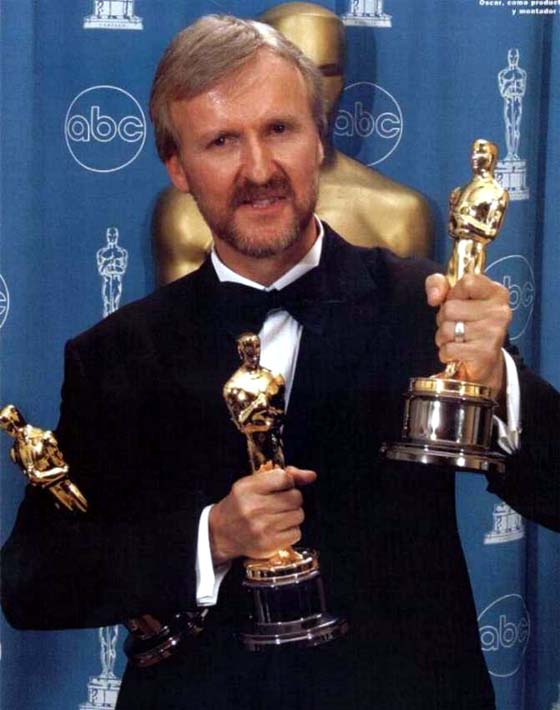
- James Cameron promoting 3D TV - Indian Television
- Movie review: 'Shopgirl' - Chicago Tribune
- Movie theaters cut print show times as Web gains - Lubbock Avalanche-Journal
- Man charged with having sex with 15-year-old in movie theater - Morning Call
| Posted: 21 Aug 2009 11:51 PM PDT KANSAS CITY, Mo. (AP) — Filmgoers who have long turned to the local newspaper to find theaters and show times for movies may have to start looking elsewhere as theater chains rethink the value of paper and ink in a digital age. The top two U.S. chains, Regal Entertainment Group and AMC Entertainment Inc., have begun in recent months to reduce or eliminate the small-type listings showing the start times for movies at individual theaters. Theaters typically must pay newspapers to print that information. Looking to cut costs, the theater chains are instead directing consumers to their Internet sites or third-party sites, like Fandango, Moviefone or Flixster, which offer those listings for free and make money from the fees they charge for selling advance tickets to movies. Many of those sites also feature film reviews and movie trailers. The effort may be gaining some traction, as U.S. Internet traffic to AMC's Web site rose 21 percent in July compared with a year ago, according to comScore Inc., while visits to Regal's Web site were up 18 percent. The Newspaper Association of America doesn't track revenue that newspapers generate from print movie listings, but believes the amount is relatively small. Yet every dollar counts as newspapers are forced to cut staff, reduce the frequency of print editions or even close completely amid the recession. And readers have come to expect such listings. Seeing them curtailed or disappear could give them yet another reason to abandon their subscriptions. "For a reader, some things that are ads are actually considered news," said Mort Goldstrom, the NAA's vice president of advertising. "Ads for concerts and things at clubs, for restaurants and movies — that's a reason people read." He said the pullback in listings will hurt theaters by reducing their visibility among potential customers, sending those dollars to competitors that still buy listings or to other sources of entertainment like plays or clubs. Readers formulating weekend plans "may look at something broader than Moviefone," he said. "That's the piece that newspaper Web sites have and niche (entertainment) publications have." Kansas City-based AMC helped shine a spotlight on the trend last month when it pulled its listings from The Washington Post, prompting the newspaper's ombudsman, Andrew Alexander, to deflect readers' ire in his blog. "Most readers believe that it was the newspaper's decision," Alexander wrote, comparing it to The Post's recent move to cut back on the newspaper's television listings. "In fact, movie listings in the print product are paid advertising, and it was AMC's decision to stop paying." The Post declined further comment, and Alexander wrote in his column that the newspaper wouldn't tell him either how much revenue the AMC ads provided. AMC spokesman Justin Scott said daily movie listings are expensive and the theater chain believes that that money would be better spent promoting its value programs or other theater events. "In an era when many moviegoers are using alternative resources to access show times, AMC has chosen to reallocate its show-time information methods," Scott said. Scott wouldn't say where else AMC has cut its listings and how much it has saved. But he said "so far we've seen no impact on attendance." Regal, based in Knoxville, Tenn., said its in-theater and online surveys found 60 percent to 80 percent of respondents saying they received their movie listings online. "So we've evaluated our newspaper strategy on a case-by-case basis and in a number of markets have eliminated our newspaper ads," spokesman Dick Westerling said, adding that in other markets Regal theaters run movie listings only on the weekends. The company has eliminated ads in such markets as San Francisco, Seattle, St. Louis and Orlando, Fla. Westerling would not disclose how much Regal spends on movie listings, but he said ticket sales haven't significantly changed. He said that the company has also tapped social networks, such as Facebook, MySpace and Twitter, to communicate listings with customers who sign up for updates. Carmike Cinemas, a Columbus, Ga.-based chain that operates primarily in smaller towns, also has cut back on newspaper ads in some markets, in most cases just buying listings on the weekends. "Out of the 50 markets where we've done drastic reductions, I've received one complaint," said Dale Hurst, Carmike's director of marketing. "I'm not trying to be a soothsayer but everyone seems to be going high-tech. They want it now." Some newspapers don't charge for movie listings, considering them akin to community meeting notices or television listings. In markets where the listings are free, Regal and AMC said they've continued to run movie listings. The NAA's Goldstrom said, though, that he knew of no newspaper that has dropped fees as a result of the theaters' pullback. Movie studios, meanwhile, have been cutting their own newspaper advertising as well. The newspaper trade group said national movie-related display advertising totaled $141.5 million in the first quarter of 2009, or 51 percent lower than five years ago. Ken Doctor, a media analyst with Outsell Inc., said some newspapers have responded by teaming up with Web sites that sell movie tickets, gaining a small revenue stream on each ticket sold, or by selling movie studios sponsorships for parts of their Web sites. For example, he noted that The New York Times displays small ads for movies when a user wants to e-mail a news story to a friend. In general, though, Internet ad rates haven't matched what print commands. And as social-networking sites like Twitter and Facebook become the place to learn about which movies are hot and where they're playing, he said, newspapers and their Web sites risk losing their readers if they cannot quickly figure out how to tap in. Andrew Lipsman, director of industry analysis for comScore, said the online sites have become more interactive than newspapers. Although newspapers may try to add similar features to their own sites, he said, the damage may be done. "Once a behavior has moved from the print medium to online, in many cases people go to the online brands," Lipsman said. "They won't necessarily go to the newspaper." Copyright 2009 Associated Press. All rights reserved. This material may not be published, broadcast, rewritten, or redistributed.  This posting includes an audio/video/photo media file: Download Now |
| James Cameron promoting 3D TV - Indian Television Posted: 22 Aug 2009 12:48 AM PDT
Parallely, Panasonic is trying to get consumers excited about three-dimensional viewing in the home -- excited enough to buy new flat-panel sets and new Blu-ray disc players. Viewers will have to wear special glasses to experience the 3D effect. It's not clear how much 3D TVs would cost. Panasonic is planning to start selling 3D TVs next year. Sony, which has its own movie division and Samsung Electronics of South Korea have shown prototypes and may offer similar products. Several animation films are already being shown in the 3D format in theatres along with a handful of live-action movies. Avatar set for release 18 December will be the biggest Hollywood film to debut worldwide in both 2D and 3D. "I believe 3D is how we will experience movies, gaming and computing in the near future. 3D is not something you watch. It's a reality you feel you could step into," Cameron said. Panasonic plans to have several trailer-vans driving around in the U.S. and Europe next month with large-screen 3D TVs inside showing Avatar. In Japan, footage from Avatar -- a science-fiction romance set in a futuristic jungle inhabited by creatures will appear in ads for 3D TVs.  This posting includes an audio/video/photo media file: Download Now |
| Movie review: 'Shopgirl' - Chicago Tribune Posted: 22 Aug 2009 12:41 AM PDT 2½ stars (out of four) Claire Danes was not yet of driving age when she starred in the TV series "My So-Called Life" and made her second feature film, Gillian Armstrong's remake of "Little Women." The latter came out in late 1994 and caused people to wonder who this phenom was, the one handling sickly young Beth March with such quiet assurance. Actors are born with a unique set of assets: what they look like. Then there is everything else: Talent, tact, nerve and dancing ability, the dance partners being many, beginning with the role and ending with the camera. With her limpid saucer eyes and the good sense not to bat them recklessly, Danes has come through her share of dreck in the last decade. But "Shopgirl," set in a grandly romanticized Los Angeles, affords her a real showcase, and she's spectacularly good in it. She's far better than the film, in fact. Danes, who does more with a wary or puzzled smile than most performers can do with an Oscar-baiting monologue, makes an uneven film worth seeing. This is the definition—mine, anyway—of a 21/2-star movie, halfway between fair and good, in this instance an overscaled enterprise grounded by a performance among the year's best. Written by and co-starring Steve Martin, adapted from Martin's 2000 novella, "Shopgirl" is a bookend to Martin's earlier, more antic L.A. story, the one called "L.A. Story." Danes plays Mirabelle, one of countless young searchers not yet 30, looking for a niche and a connection in a landscape of glittering loneliness. An emigre from Vermont, she lives in an apartment in the hills of the Silver Lake neighborhood and works in the glove department at Saks, a few miles and several economic time zones away in Beverly Hills. She pursues her photography on her own time, while awaiting the relationship to elevate her experience above "a pile of near-misses." At the laundromat one day she meets Jeremy (Jason Schwartzman), a scruffy geek who doesn't seem likely to elevate her any which way. Still, why not? Thus begins a tentative relationship, consisting mostly of Jeremy going Dutch and talking about T-shirt design. Then one day at the glove counter Mirabelle meets Ray Porter (Martin), who exchanges some pleasantries, buys a pair of gloves—he later sends them to her as a gift--and asks her to dinner. A businessman of vague but lucrative skills, Ray travels a great deal. Mirabelle is swept away by their courtship. Ray is as well, though he has an arm's-length way about him, as if apologizing for the end of the affair while in the middle of it. He wants Mirabelle in his life, yet safely out of the range of serious commitment. As "Shopgirl" traces the three sides of this triangle, Jeremy embarks on the road with a band as a means to becoming a better man, worthy of Mirabelle. Schwartzman, star of the lovely comedy "Rushmore," goes all the way into his own extreme realms of dorkitude in "Shopgirl." Too much so? Probably. There's something about Schwartzman's timing that plays havoc with his fellow performers. You have to hand it to him, though: He does not curry audience favor, even when a little wouldn't hurt. Martin, playing a man whose coolly genial surface masks an elusive heart, knows from recessive emotional types. They are not the easiest types to bring to life in a movie, and while Martin does some of the most relaxed acting of his career in "Shopgirl," Ray—too good to be true, even in his stubborn emotional reserve—remains fuzzy around the edges. Playing a different, more nerve-endy sort of recessive character, Danes brings out the best and truest material "Shopgirl" has to offer. She creates a plaintive screen incarnation of a woman who, without her artistic and intellectual pursuits, would fall headlong into what might be called L.A.'s decorative class. In her scenes with Schwartzman, she works in one set of rhythms and keys—Is this guy OK? Is he worth the investment? With Martin, she switches gears, her "Whatcha doin', Mister?" banter revealing a bittersweet insecurity. On the page "Shopgirl" was a small but fine Chekhovian thing, coasting along on Martin's omniscient narration and witty prose. Its appeal was no surprise to fans of Martin's earlier work, especially his pieces for The New Yorker (later gathered for the "Pure Drivel" collection). The movie version of "Shopgirl," directed by Anand Tucker, locates roughly half of what worked in the novella. Tucker makes everything a little too big, favoring an epic, fable-like visual treatment of Martin's story. The aisles of Saks, the starry L.A. skies—stars? They can see stars in L.A.? This is a fantasy!—the Pygmalion aspect to the Ray and Mirabelle romance: All is heightened and stylized. The approach overloads the story. The worst offender is composer Barrington Pheloung, whose music is gushingly string-intensive and designed to transform the inner lives of Little People into another dimension. In hurricane terms, it's a Category 5 musical score. A film closer to the scale and visual intimacy of "Lost in Translation" would've made a better fit for "Shopgirl." Danes, however, lends the film considerable emotional amplitude and that most elusive of all screen traits: charm. mjphillips@tribune.com ---- 'Shopgirl' Directed by Anand Tucker; screenplay by Steve Martin, based on his novella; cinematography by Peter Suschitzky; production design by William Arnold; music by Barrington Pheloung; edited by David Gamble; produced by Ashok Amritraj, Jon Jashni and Steve Martin. A Touchstone Pictures and Hyde Park Entertainment release; opens Friday. Running time: 1:46. MPAA rating: R (for some sexual content and brief language). Ray Porter - Steve Martin Mirabelle - Claire Danes Jeremy - Jason Schwartzman Lisa Cramer - Bridgette Wilson-Sampras  This posting includes an audio/video/photo media file: Download Now |
| Movie theaters cut print show times as Web gains - Lubbock Avalanche-Journal Posted: 22 Aug 2009 12:13 AM PDT KANSAS CITY, Mo. — Filmgoers who have long turned to the local newspaper to find theaters and show times for movies may have to start looking elsewhere as theater chains rethink the value of paper and ink in a digital age. The top two U.S. chains, Regal Entertainment Group and AMC Entertainment Inc., have begun in recent months to reduce or eliminate the small-type listings showing the start times for movies at individual theaters. Theaters typically must pay newspapers to print that information. Looking to cut costs, the theater chains are instead directing consumers to their Internet sites or third-party sites, like Fandango, Moviefone or Flixster, which offer those listings for free and make money from the fees they charge for selling advance tickets to movies. Many of those sites also feature film reviews and movie trailers. The effort may be gaining some traction, as U.S. Internet traffic to AMC's Web site rose 21 percent in July compared with a year ago, according to comScore Inc., while visits to Regal's Web site were up 18 percent. The Newspaper Association of America doesn't track revenue that newspapers generate from print movie listings, but believes the amount is relatively small. Yet every dollar counts as newspapers are forced to cut staff, reduce the frequency of print editions or even close completely amid the recession. And readers have come to expect such listings. Seeing them curtailed or disappear could give them yet another reason to abandon their subscriptions. "For a reader, some things that are ads are actually considered news," said Mort Goldstrom, the NAA's vice president of advertising. "Ads for concerts and things at clubs, for restaurants and movies — that's a reason people read." He said the pullback in listings will hurt theaters by reducing their visibility among potential customers, sending those dollars to competitors that still buy listings or to other sources of entertainment like plays or clubs. Readers formulating weekend plans "may look at something broader than Moviefone," he said. "That's the piece that newspaper Web sites have and niche (entertainment) publications have." Kansas City-based AMC helped shine a spotlight on the trend last month when it pulled its listings from The Washington Post, prompting the newspaper's ombudsman, Andrew Alexander, to deflect readers' ire in his blog. "Most readers believe that it was the newspaper's decision," Alexander wrote, comparing it to The Post's recent move to cut back on the newspaper's television listings. "In fact, movie listings in the print product are paid advertising, and it was AMC's decision to stop paying." The Post declined further comment, and Alexander wrote in his column that the newspaper wouldn't tell him either how much revenue the AMC ads provided. AMC spokesman Justin Scott said daily movie listings are expensive and the theater chain believes that that money would be better spent promoting its value programs or other theater events. "In an era when many moviegoers are using alternative resources to access show times, AMC has chosen to reallocate its show-time information methods," Scott said. Scott wouldn't say where else AMC has cut its listings and how much it has saved. But he said "so far we've seen no impact on attendance." Regal, based in Knoxville, Tenn., said its in-theater and online surveys found 60 percent to 80 percent of respondents saying they received their movie listings online. "So we've evaluated our newspaper strategy on a case-by-case basis and in a number of markets have eliminated our newspaper ads," spokesman Dick Westerling said, adding that in other markets Regal theaters run movie listings only on the weekends. The company has eliminated ads in such markets as San Francisco, Seattle, St. Louis and Orlando, Fla. Westerling would not disclose how much Regal spends on movie listings, but he said ticket sales haven't significantly changed. He said that the company has also tapped social networks, such as Facebook, MySpace and Twitter, to communicate listings with customers who sign up for updates. Carmike Cinemas, a Columbus, Ga.-based chain that operates primarily in smaller towns, also has cut back on newspaper ads in some markets, in most cases just buying listings on the weekends. "Out of the 50 markets where we've done drastic reductions, I've received one complaint," said Dale Hurst, Carmike's director of marketing. "I'm not trying to be a soothsayer but everyone seems to be going high-tech. They want it now." Some newspapers don't charge for movie listings, considering them akin to community meeting notices or television listings. In markets where the listings are free, Regal and AMC said they've continued to run movie listings. The NAA's Goldstrom said, though, that he knew of no newspaper that has dropped fees as a result of the theaters' pullback. Movie studios, meanwhile, have been cutting their own newspaper advertising as well. The newspaper trade group said national movie-related display advertising totaled $141.5 million in the first quarter of 2009, or 51 percent lower than five years ago. Ken Doctor, a media analyst with Outsell Inc., said some newspapers have responded by teaming up with Web sites that sell movie tickets, gaining a small revenue stream on each ticket sold, or by selling movie studios sponsorships for parts of their Web sites. For example, he noted that The New York Times displays small ads for movies when a user wants to e-mail a news story to a friend. In general, though, Internet ad rates haven't matched what print commands. And as social-networking sites like Twitter and Facebook become the place to learn about which movies are hot and where they're playing, he said, newspapers and their Web sites risk losing their readers if they cannot quickly figure out how to tap in. Andrew Lipsman, director of industry analysis for comScore, said the online sites have become more interactive than newspapers. Although newspapers may try to add similar features to their own sites, he said, the damage may be done. "Once a behavior has moved from the print medium to online, in many cases people go to the online brands," Lipsman said. "They won't necessarily go to the newspaper."  This posting includes an audio/video/photo media file: Download Now |
| Man charged with having sex with 15-year-old in movie theater - Morning Call Posted: 22 Aug 2009 01:17 AM PDT |
| You are subscribed to email updates from Add Images to any RSS Feed To stop receiving these emails, you may unsubscribe now. | Email delivery powered by Google |
| Google Inc., 20 West Kinzie, Chicago IL USA 60610 | |


.gif "OBAT KUAT")


.gif)